The Lab

Where computer vision goes to dance

Installations, live audio-reactive sets, and real-time experiments. This is the half of the practice that proves the other half: making perception systems do something beautiful, live, with no second take.

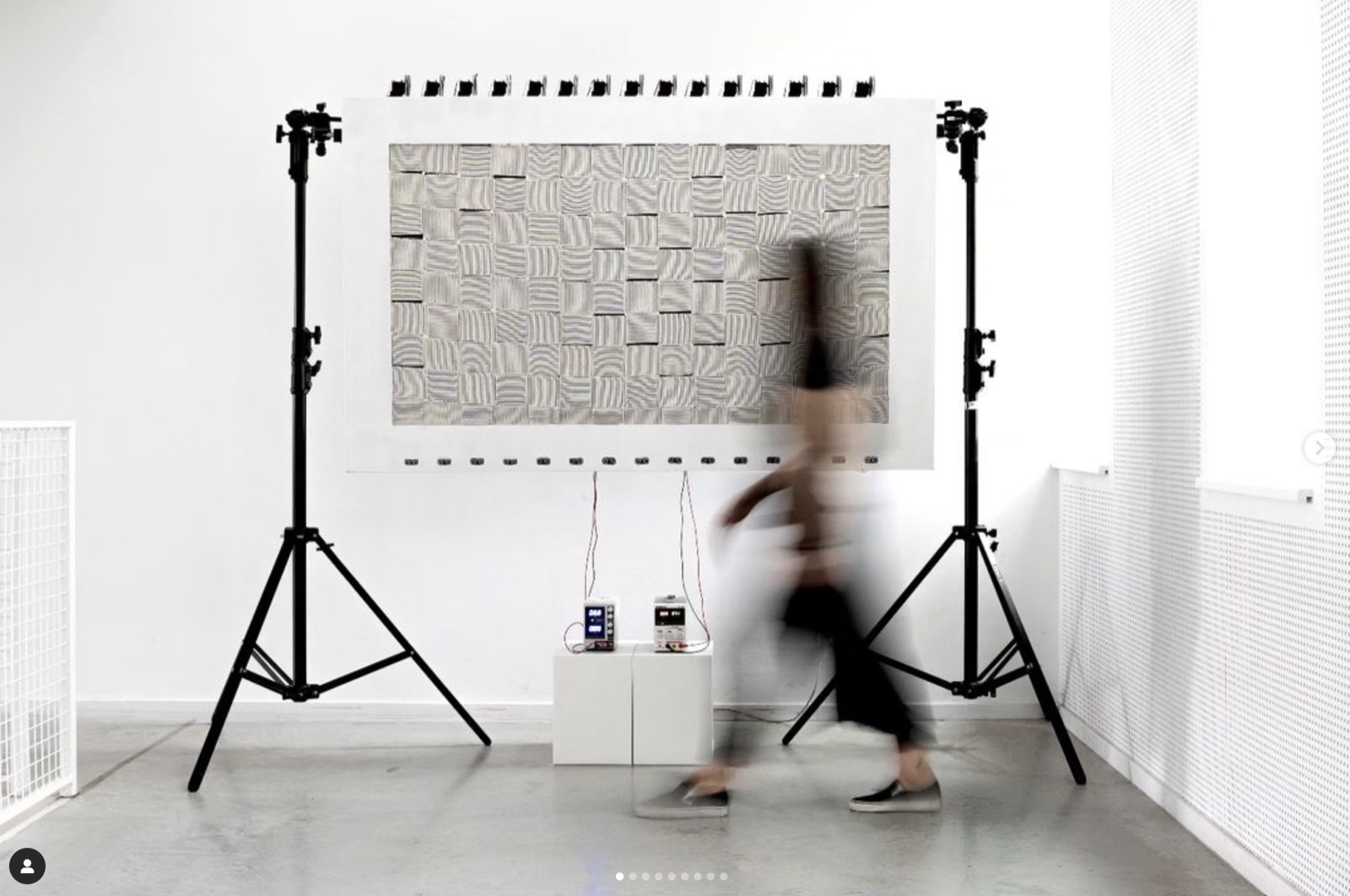
The Future Structure woven installation, lit and mid-movement

2024

Future Structure

with Rita Madarász (MOME) · Ars Electronica 2024

An interactive woven installation that senses its surroundings and begins to move without being touched. Built for Rita Madarász’s MA thesis project at MOME and shown at Ars Electronica 2024, it explores technology as an agent for evoking the sense of touch. I designed the 3D-printed components, the electronics, and the sensing and motion control.
  • Arduino
  • Sensor fusion
  • 3D component design
  • Electronics
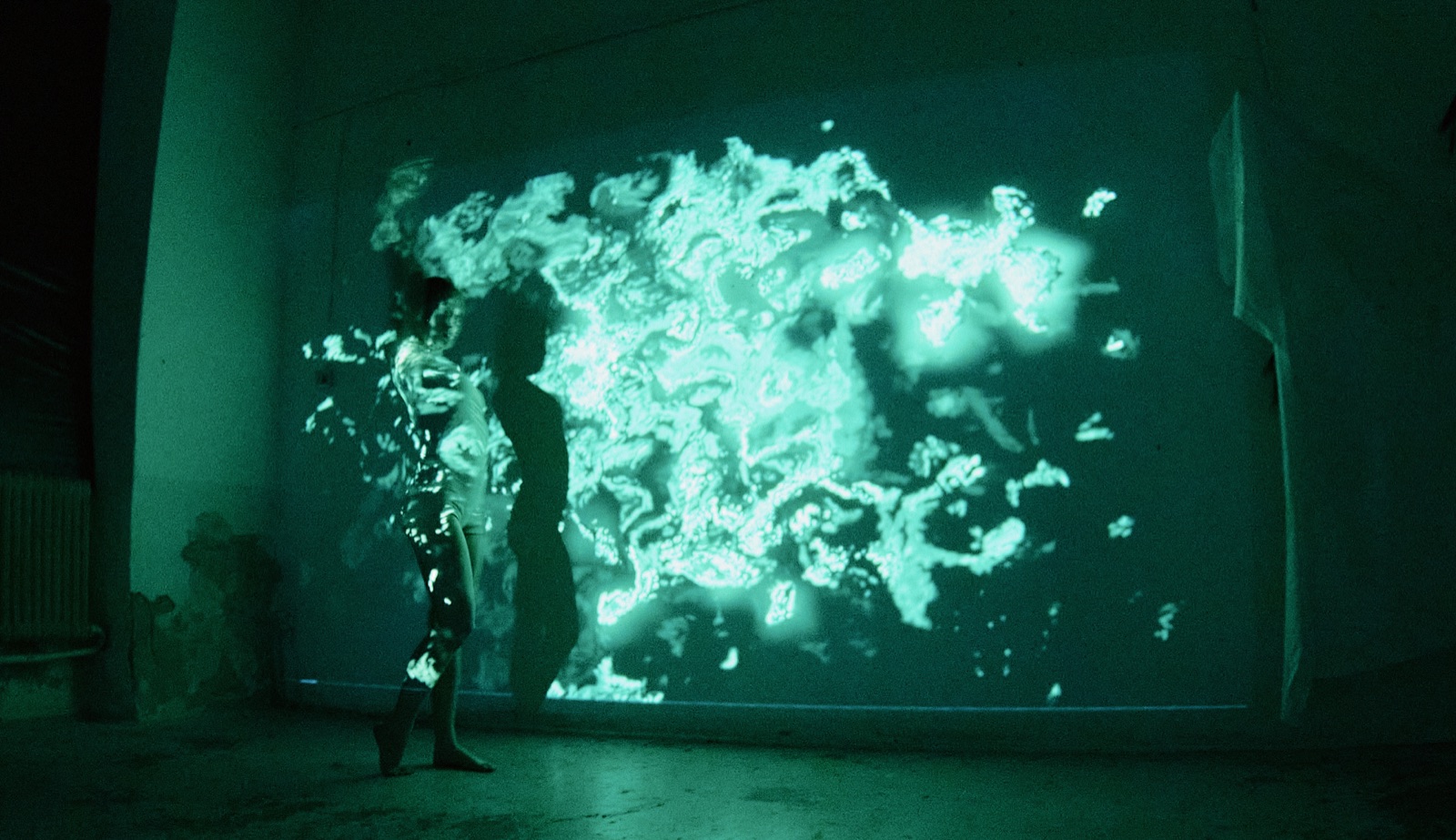
A dancer surrounded by reactive projected visuals

2023

Stimulotion

Ongoing research into the connection between dance, music and visuals. Each of the three controls and depends on the other two, forming a feedback loop that generates itself — a whirlpool that pulls the audience in. Body tracking drives the visuals, the visuals cue the music, and the music moves the dancer.

  • Kinect
  • TouchDesigner
  • TD Ableton
  • Body tracking
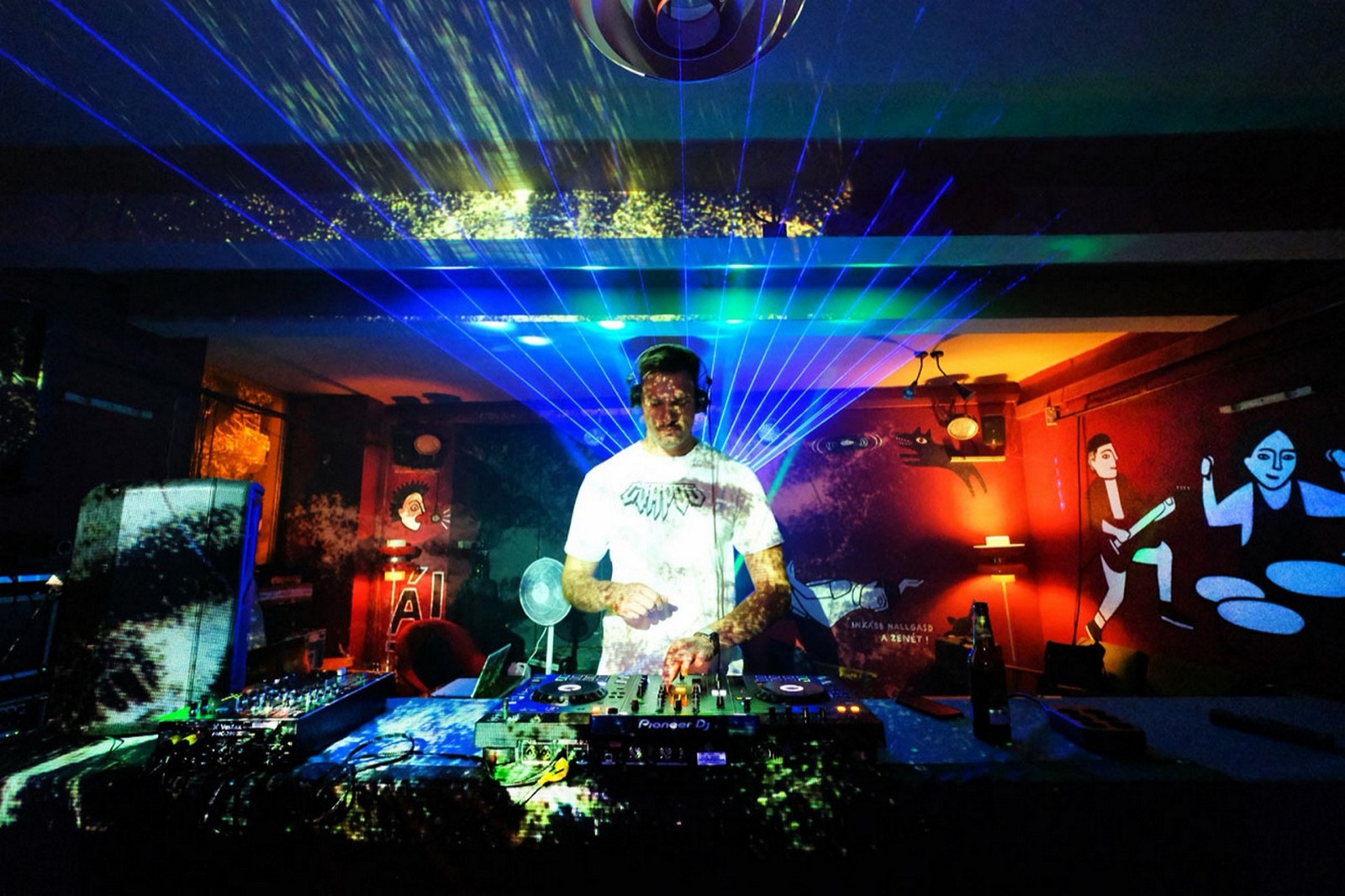
Projection-mapped visuals over a DJ booth at the Zsolnay Light Festival

2023

VJ set — Zsolnay Light Festival

Pécs, Hungary

A live, audio-reactive VJ set designed and performed for the Zsolnay Light Festival. Visuals were projection-mapped onto the DJs and the space around them and driven in real time by the incoming audio, with a laser rig cued to the same analysis.

  • TouchDesigner
  • Audio analysis
  • Projection mapping
  • Lasers
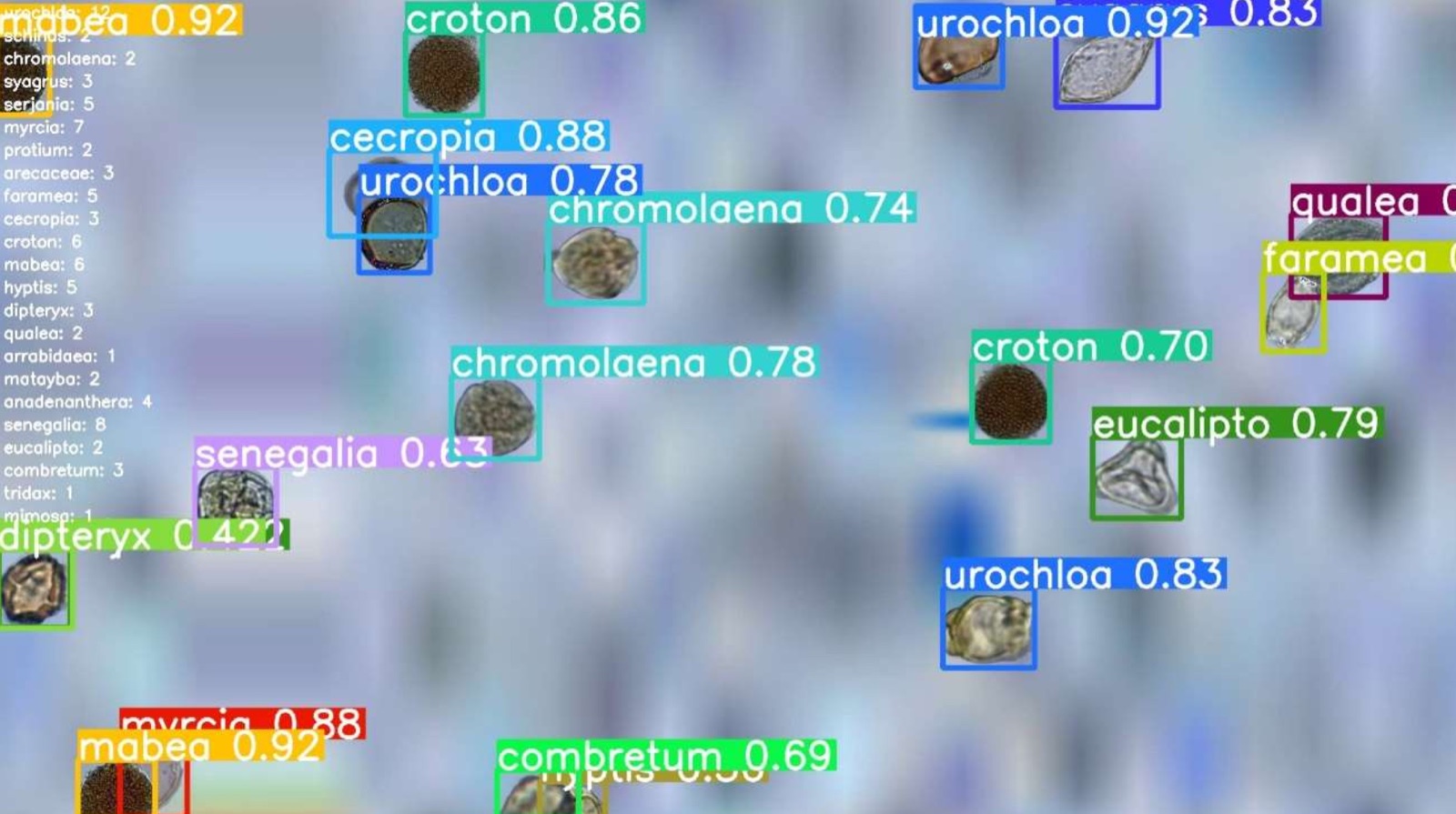
Detection boxes over pollen grains in a microscope video frame

2024

Automated pollen detection with synthetic data

MSc thesis · Bosch Thesis Project Award, 1st prize

An award-winning thesis that trains a pollen detector without a hand-labelled detection dataset. A pipeline segments pollen from a classification dataset, animates it over synthetically generated moving backgrounds, and emits YOLO-format annotations for the resulting frames. A custom PyQt annotation tool backed by PostgreSQL produced the source classification data, and the trained YOLOv5s model reaches >90% mAP@IoU50 on real footage.

  • YOLOv5
  • PyTorch
  • OpenCV
  • Synthetic data
  • PyQt

Coming next

Web experiments

Procedural, asset-free sketches running in the browser — starting with the instanced particle field behind this page.